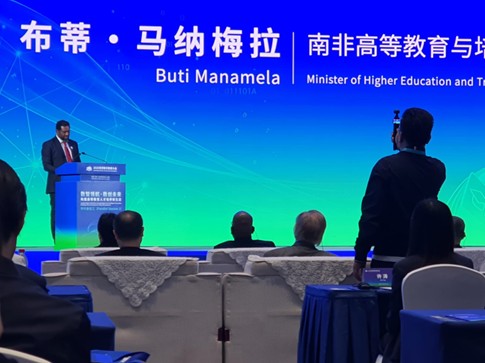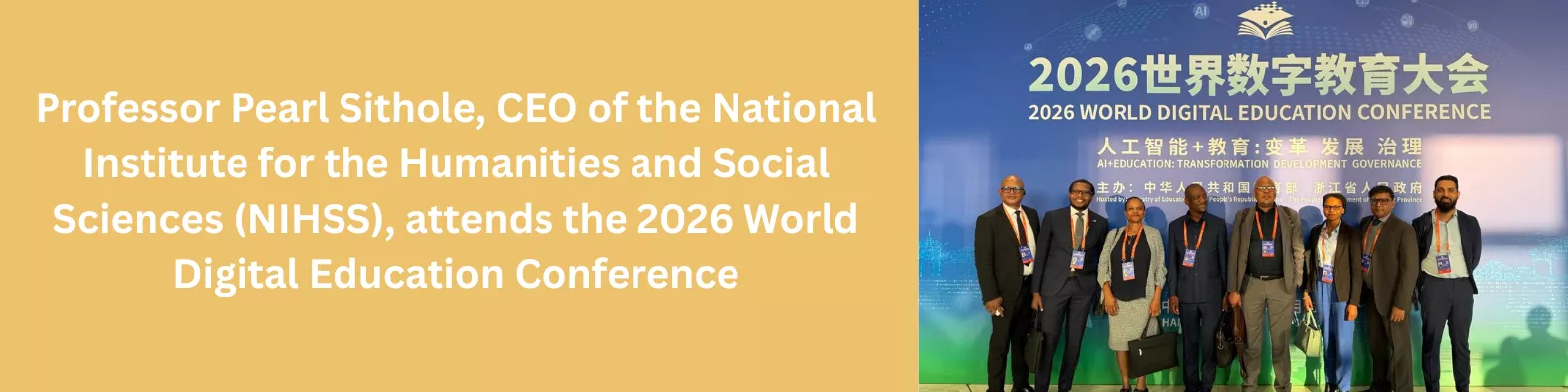
CEO of the National Institute for the Humanities and Social Sciences (NIHSS), Prof Pearl Sithole, recently attended the 2026 World Digital Education Conference held in Hangzhou, China. Convened under the theme “AI + Education: Transformation, Development and Governance,” the conference brought together global education leaders, policymakers, researchers, and institutional representatives to explore the growing impact of artificial intelligence and digital technologies on education systems, governance, innovation, and future learning models.
The conference formed part of broader international efforts to examine how AI-driven technologies are reshaping teaching, learning, research, institutional governance, and educational accessibility within rapidly changing global contexts. Discussions further focused on the governance frameworks, ethical considerations, and collaborative approaches required to ensure that digital transformation within education remains inclusive, equitable, and socially responsive.
The 2026 conference marked the broadest and highest-level participation since the initiative was first launched, bringing together government leaders, education ministers, diplomats, international organisations, university leaders, researchers, technology experts, and representatives from major global technology companies. The programme further included the inaugural Global Youth AI Innovation Camp, hosted in Hangzhou from 10-14 May 2026, which brought together youth teams from 23 countries to engage in collaborative learning, innovation, and practical exploration within the fields of artificial intelligence and digital education.
The inclusion of global youth participation alongside high-level policy and academic engagements reflected the growing international emphasis on preparing societies, institutions, and future generations for rapidly evolving digital and AI-driven environments. The conference therefore served not only as a platform for technological dialogue, but also as a broader engagement on the future of education, governance, inclusion, and international collaboration within an increasingly digital world.
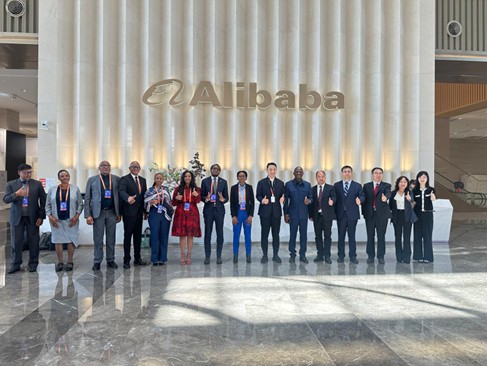
As part of the broader conference programme, South Africa’s Minister of Higher Education and Training led a delegation of Department of Higher Education and Training (DHET) entities and Post-School Education and Training (PSET) sector leaders to engage with digital and artificial intelligence exhibitions, emerging education technologies, and practical models of digitisation integration within teaching, learning, and institutional governance practices. The programme further included engagements with industry stakeholders such as HUAWEI, which hosted the South African delegation at its Research and Development (R&D) campus to showcase its approaches to technological innovation, product development, and socio-economic advancement.
These engagements provided important opportunities for reflection on the localisation of digital transformation within the South African context, including broader considerations relating to ethics, governance, institutional readiness, decision-making, and equitable access within increasingly digitised education environments.
Within the African context, conversations on digital education and artificial intelligence carry additional significance as institutions and societies continue to navigate unequal access to technology, digital infrastructure disparities, evolving labour market demands, and questions relating to inclusive participation within the digital economy. As education systems increasingly integrate AI-driven technologies, there is growing recognition that digital transformation must also be accompanied by critical reflection on ethics, equity, governance, language, culture, and the social implications of technological advancement.
For the Humanities and Social Sciences (HSS), engagements of this nature are increasingly significant as questions surrounding artificial intelligence, digital transformation, ethics, governance, knowledge systems, social equity, and the future of learning continue to intersect with broader societal realities. Within the HSS space, conversations on AI and digital education extend beyond technological advancement and engage deeper considerations relating to human agency, public policy, inequality, cultural context, critical thinking, and democratic participation in emerging digital futures.
Prof Sithole’s participation reflects the importance of ensuring that African and Global South perspectives remain part of international conversations shaping the future of education, technology governance, and knowledge production. It further aligns with the NIHSS’s commitment to supporting critical interdisciplinary engagement on issues influencing society, scholarship, innovation, and the evolving role of education in a digitally transforming world.
As conversations around artificial intelligence and digital transformation continue to evolve globally, engagements of this nature remain important in ensuring that the Humanities and Social Sciences contribute meaningfully to shaping inclusive, ethical, and socially responsive digital futures.