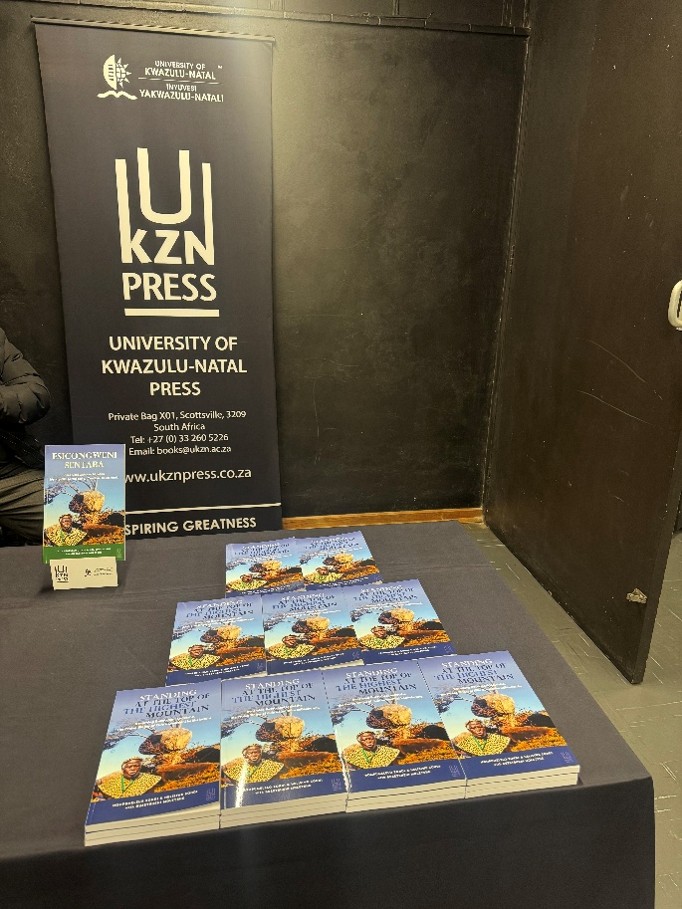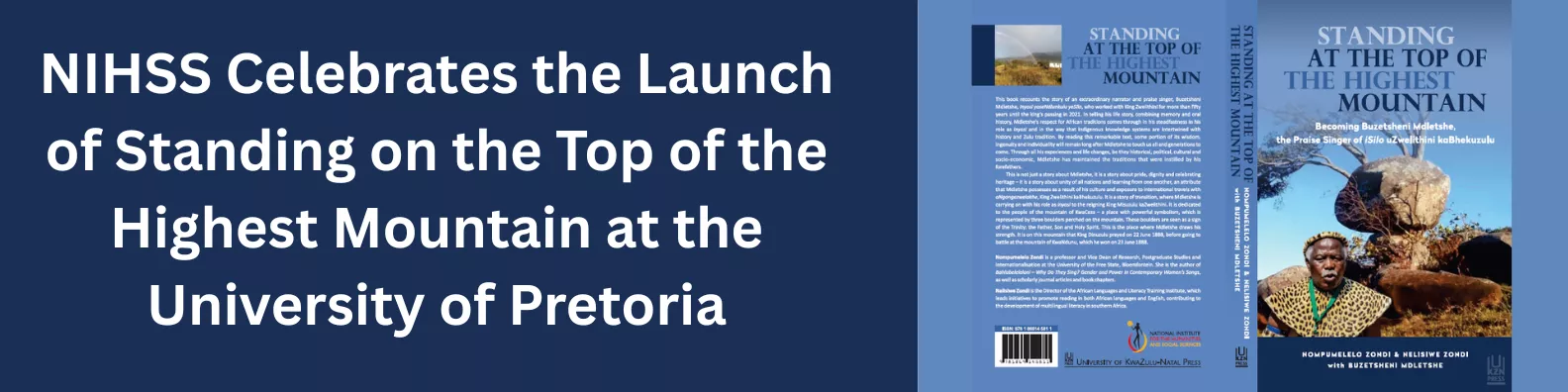
The National Institute for the Humanities and Social Sciences (NIHSS) joined scholars, cultural leaders, members of the publishing and heritage communities, family and invited guests at the University of Pretoria on 10 June 2026 for the launch of Standing on the Top of the Highest Mountain: Becoming Buzetsheni Mdletshe, the Praise Singer of iSilo uZwelithini kaBhekuzulu. The publication, authored by Prof Nompumelelo Zondi and Ms Nelisiwe Zondi, with Buzetsheni Mdletshe, forms part of the NIHSS-funded Hidden Voices Project, a series dedicated to documenting and bringing into public knowledge the lives, histories and intellectual contributions of individuals whose voices have often remained outside formal archives.
The launch marked an important moment for the NIHSS, not only because the work was supported by the Institute, but also because Prof Nompumelelo Zondi, the project leader, now also serves as a member of the NIHSS Board Committee. Her continued association with the Institute reflects the depth of scholarly leadership that the NIHSS seeks to support and celebrate within the Humanities and Social Sciences landscape.
At the centre of the book is Baba Buzetsheni Mkhohliseni Mdletshe, widely recognised as iNyosi yaseNdlunkulu yeSilo, who served the late King Goodwill Zwelithini kaBhekuzulu for more than five decades. Through oral interviews, archival material, memory, language and lived experience, the book preserves his journey as a praise singer, cultural custodian and bearer of Zulu oral tradition. It is a work that speaks powerfully to the importance of listening, documenting and honouring knowledge that lives within communities, families, cultural practice and oral performance.
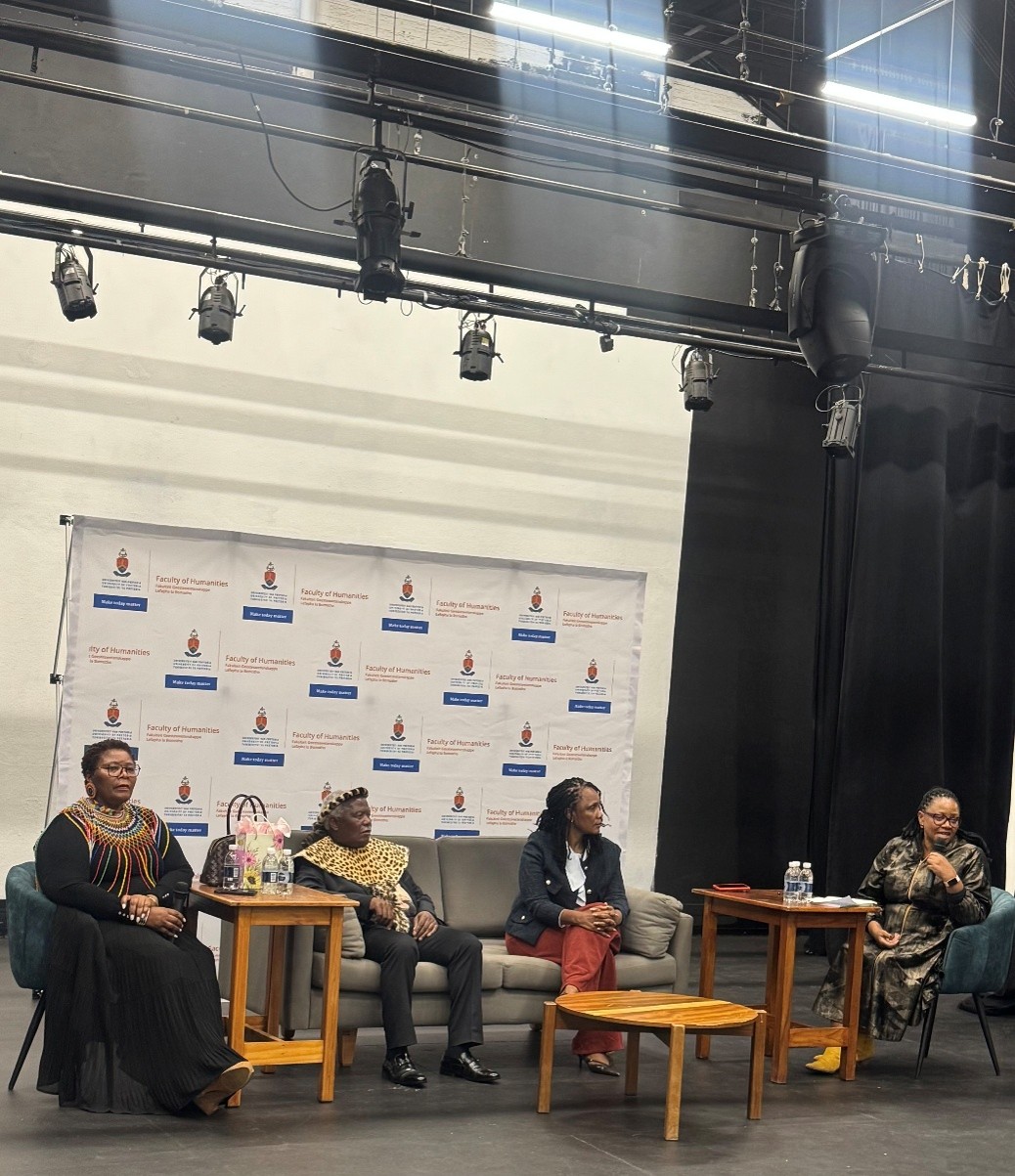
The evening’s programme included welcoming remarks, NIHSS congratulatory remarks delivered by Ms Hlanzekile Mbokazi, reflections on the story behind the book by Baba Buzetsheni Mdletshe, a performance, and an in-conversation session with Prof Nompumelelo Zondi, Ms Nelisiwe Zondi and Baba Mdletshe. The discussion reflected on the responsibility of documenting a life and legacy entrusted to the authors, the significance of working with oral history, and the importance of preserving African languages, cultural memory and indigenous knowledge systems.
In her reflections, Prof Zondi acknowledged the deeply personal and scholarly nature of the project, including the contribution of her sister and co-author, Ms Nelisiwe Zondi, whom she described as a vital support structure throughout the journey. She noted that the project required care, research discipline and a commitment to honouring the name of Baba Mdletshe, the University, the NIHSS and the broader communities represented in the work.
The launch also affirmed the important role of universities in preserving intellectual and cultural heritage. Speakers reflected on the fact that knowledge is not only produced in lecture halls and libraries, but also within communities, through lived experience, language, memory and oral tradition. In this sense, the launch was both an academic event and a cultural celebration, bringing together the university, the NIHSS, the Zulu community and the broader public in recognition of a living archive.
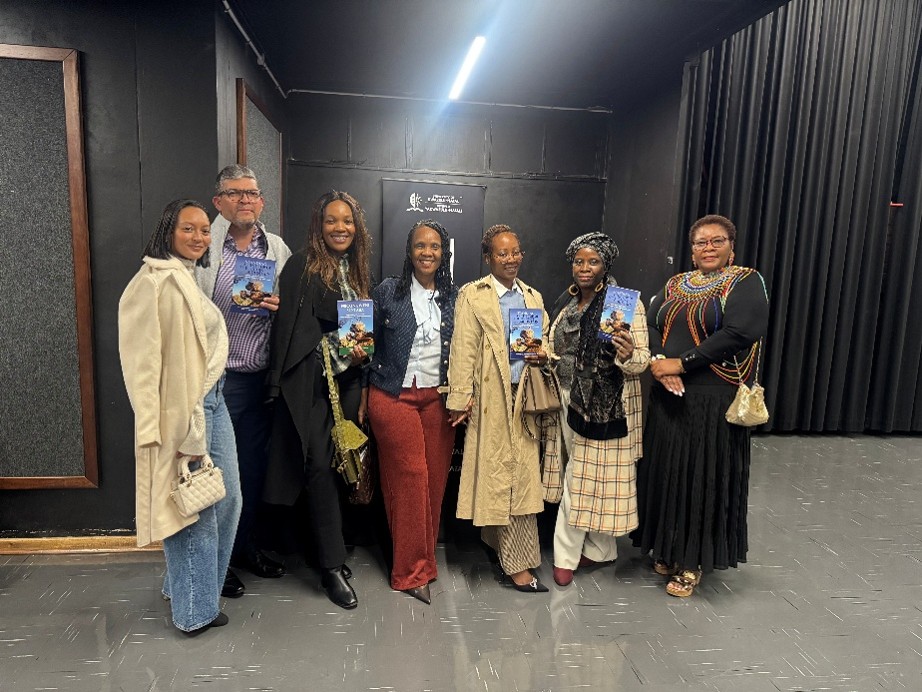
Representing the NIHSS at the launch were Ms Hlanzekile Mbokazi, Ms Boitumelo Mosoane and Ms Ignatia Madalane. Their attendance signalled the Institute’s continued commitment to supporting research and publication projects that deepen public understanding of South Africa’s diverse histories, languages, cultures and knowledge systems.
Standing on the Top of the Highest Mountain is more than a biography. It is a record of voice, memory, dignity and cultural continuity. Through the Hidden Voices Project, the NIHSS continues to support work that ensures such stories are not only preserved, but shared, studied and celebrated for future generations.