Mon – Fri: 08:00 – 16:30   |   info@nihss.ac.za

Alex La Guma: The Exile Years, 1966-1985 revisits the exile writing of Alex La Guma (1925-1985), a canonical writer of South African literature during the apartheid era. An activist with the South African Communist Party, the South African Coloured People's Organisation, and the African National Congress, La Guma published numerous works and served as Secretary General of the Afro-Asian Writers Association from 1979 until his death inn Havana, Cuba, in 1985. He posthumously received the Order of lkhamanga in Gold for his body of work in 2003.

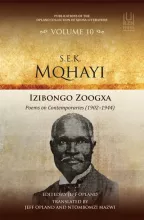
Mqhayi’s Izibongo Zoogxa is a collection of 39 poems about persons and personages who lived during his lifetime (1875–1945). Originally published in ephemeral newspapers, none of the poems has subsequently been republished; all appear here in more permanent form for the first time.

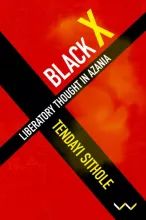
Sithole problematises the signifier X, as a marker of the dehumanization of the black subject. He argues that post-1994 South Africa retains the markers of its colonial past, and remains a territory of unfreedom for blacks. He offers a new imagination for a liberatory project through the idea of Azania as a site of true emancipation.

In Black X: Liberatory Thought in Azania, Tendayi Sithole elaborates on the problematic signifier X, a marker of the dehumanization of the black subject, and presents the struggle for Azania as a liberatory project.

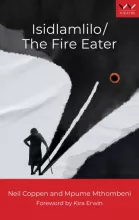
Isidlamlilo/ The Fire Eater is an electrifying one-woman play inspired by the true story of a woman who served as a political assassin in the build-up to South Africa’s first democratic elections. Zenzile Maseko, the protagonist, is a 60-year-old Zulu grandmother living in a women’s hostel in Durban. Falsely declared dead by the Department of Home Affairs, she finds herself cast into a Kafkaesque nightmare that forces her to confront her past.

In a rapidly shifting world order, this book’s consideration of what contemporary Pan-Africanism means is timely. It covers the proceedings of a conference on Pan-Africanism in November 2022, held in Pretoria, South Africa. The conference aimed to create a conversation for a new generation for whom the original ideas of Pan-Africanism and African Unity are lessons of history. As this book shows, it proved to be a vibrant expression of diverse and stimulating views. 

Protest in South Africa: Rejection, reassertion, reclamation; Edited by Heidi Brooks, Rekgotsofetse Chikane and Shauna Mottiar, the volume explores South Africa’s post-1994 protest landscape with a view to understanding the dynamics, underpinnings, and implications of contemporary protest. Exploring the multifaceted and interconnected drivers of protest, the volume illuminates both short term causes and institutional and structural drivers, while highlighting some of the strategic challenges that emerge from popular unrest.

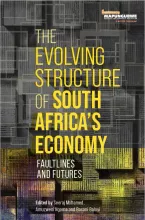
MISTRA’s edited research-based volume, The Evolving Structure of South Africa’s Economy: Faultlines and Futures, examines the extent to which the South African economy is contributing towards the achievement of the country’s developmental goals. The publication draws attention to how historical, global, and domestic economic dynamics have affected the country’s structural transformation. It deals with policies that have shaped the evolution of the structure of the economy from a classic Minerals Energy Complex (MEC) to a Minerals Energy Finance Complex (MEFC).

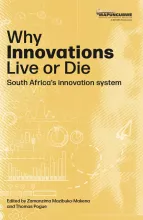
A vision for South Africa's National System of Innovation (NSI) was articulated some three decades ago in the White Paper on Science and Technology (1996). The idealism that inspired a nation in rebirth also found expression in policy for the science and innovation sector. Since then, the NSI has been moulded and re-moulded in light of domestic and global experiences.

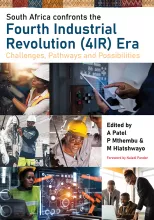
The Fourth Industrial Revolution (4IR) has transformed various sectors like banking, education, and manufacturing with digitisation and technology. This shift has led to job losses, especially in banking due to online migration, and economic challenges exacerbated by rolling blackouts. South Africa, as a developing economy, has opportunities to leverage industrial and 4IR platforms for a Just Transition. Despite COVID-19 accelerating online learning and e-commerce, the country faces challenges like the digital divide and unemployment.